Founder, Spectrum Roadmap
Debra Solomon
The hiring manager turned career coach who teaches HR teams the small, specific changes that get capable neurodivergent people hired, and keep them past year one.

01
She's sat on both sides of the same interview
Debra Solomon is the founder of Spectrum Roadmap, and she's known for one thing: showing hiring teams why the people their process screens out could often do the job. She started in corporate management, as a buyer and department manager in big-box retail. She hired, ran teams, and wrote the performance reviews that decided who moved up.
Then she watched the same systems from her neurodivergent son's side. The interview that rewards small talk. The instructions that expect you to read between the lines. She trained as a life and career coach at NYU and spent thirty years working one-on-one with autistic and other neurodivergent adults, getting into work, staying in it, and moving up.
The calls kept coming from your side of the table too: a manager had hired someone talented and had no idea how to help them succeed. Spectrum Roadmap is her answer to both calls. If you own how your company hires, or you're the manager who just got a disclosure, her essays are written for the week you're having. Each one ends on something your team can change, and the Essential Roadmap puts those changes in front of every hiring manager when you want the whole team on it.
- 500+people trained and coached
- Top 50Most Influential Women in Business, Long Island Business News
- 11 modulesthe manager course she teaches, about 44 minutes in all
Spectrum Roadmap to confirmOur research says Debra founded Spectrum Strategies, the coaching practice that became Spectrum Roadmap, in 2013. Is that year right, and can we say it on this page?
02
Both sides wanted the same thing. Neither had been shown how.
That's why her advice rarely asks you to launch anything. "Most of what your team will change after this course is small. A question asked differently. Instructions written down. A review that measures the work rather than the small talk."
Here's what that looks like in a sentence, from the swaps she teaches managers:
03
Pick the problem on your desk
Each essay starts where you are: a panel that keeps passing on good people, a disclosure you're not sure how to answer, a finance team that thinks accommodations are a budget hole. Each one ends with what to change.
The interview
Your panel keeps passing on people who could do the job
Fewer rounds and easier questions won't fix it. Doing less of the interview is what she calls accommodation theater, and it gets the redesign blamed when the hires struggle. The fix is a redesign that shows what a candidate can actually do.
She ran hiring at a large retailer, then spent thirty years preparing candidates for the interviews that screened them out.
Redesigning the interviewAfter a disclosure
Someone just told their manager, and the manager is guessing
Year-one retention gets decided in the next thirty days. Get the support right and, as she puts it, neurodivergent employees "get the job done, and they're deeply loyal to the workplaces that get it right."
The manager on the other side of the table has been her second kind of client for three decades.
The thirty days after a disclosureAccommodation costs
Finance thinks accommodations are a budget hole
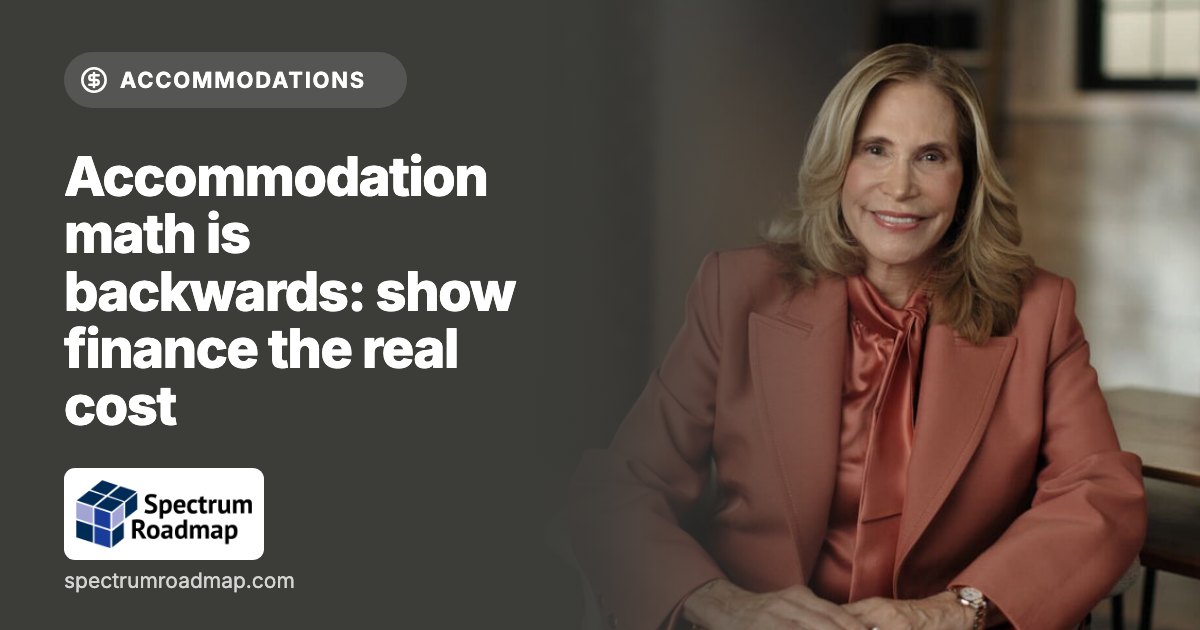
Her argument: the line you protect by discouraging requests is an order of magnitude smaller than the turnover it causes.
She's heard the finance objection from inside management and from the employee who decided not to ask.
What accommodations actually costPlacement margins
Three years in, your team still can't run this without the vendor
Buying placements is the fastest way to a first cohort and the most expensive way to a hundredth hire. Buy speed on purpose, never by default.
Her own work is built to leave the skill with your HR team.
Building the capability in-houseClarity
The awareness workshop went great, and nothing changed
Clear instructions help every employee, and neurodivergent employees most. It's a habit a manager can start Monday, one sentence at a time.
Thirty years of coaching left her a stock of one-line rewrites managers actually use.
Clarity as a management practice04
Where to read, watch and hear her
Start with the byline if you want her thinking in her own words, or join a live call if you have a case right now.
-
Paving the Road to Success
Her byline in Autism Spectrum News, arguing that people build work skills by practicing them, in groups, more than by reading about them.
-
Award
Top 50 Most Influential Women in Business
Long Island Business News, honoring her work with the autism community across Long Island and New York.
-
Talk
Voices in Autism Leadership Awards
Her remarks at the awards, on YouTube.
-
Course
The Essential Roadmap modules
Eleven short videos she teaches on recruiting, interviewing, disclosure, accommodations, team building, reviews and career paths.
-
Live
Live calls with Debra
Every other Thursday at 10 am ET on Zoom. Members bring a real situation and she works through it with the group.
05
Questions people ask
Short answers, for anyone who found her name in an essay or a search.
Who is Debra Solomon?
Debra Solomon founded Spectrum Roadmap and teaches its manager course and its live calls. Her work is helping companies hire capable neurodivergent people and keep them past the first year, through small changes to interviews, instructions and reviews.
What does Debra Solomon write about?
Five things: the interview, the first thirty days after someone discloses, what accommodations really cost, building hiring skill in-house instead of buying placements, and clear instructions as a daily habit. If strong candidates keep failing your panel, start with the interview essay.
What does Debra Solomon say about what accommodations cost?
That the money a company saves by discouraging requests is small next to the turnover the discouragement causes. The accommodations that work are usually plain: an agenda before the meeting, a quieter desk, instructions written down.
Where can I ask Debra Solomon about a real case?
On the Spectrum Roadmap live calls, every other Thursday at 10 am Eastern on Zoom. Bring an accommodation request or a review you have to write, and she works through it with the group.
The talent was never the problem
The next strong candidate your panel meets should get an interview that shows what they can do. Start there.
Read the interview essayWant your hiring team trained on this? See the Essential Roadmap